Utilizing well water, preventing scaling
In many industrial processes, condensers are crucial for stable and efficient plant operation. In evaporator systems in the food, chemical, and process industries, in particular, large quantities of vapor must be reliably cooled and condensed. Hard well water is an obvious choice of cooling medium for this: It is often directly available, economically attractive, and can reduce the need for treated fresh water. However, it also places high demands on condenser operation. The calcium and magnesium compounds dissolved in the water can be deposited on the heat transfer surfaces, where they can quickly lead to performance-reducing scaling.
Scaling as a performance killer
When using hard well water as a cooling medium, mineral deposits form, above all, on the tube inner walls of the condensers. These layers act as insulation between the cooling water and the process vapor. As a result, the heat transfer deteriorates, the condensation performance drops, and the plant needs more energy to maintain the required cooling capacity. In critical applications, scaling can lead to massive output losses – up to and including shutdown of the plant – within just a few days. The consequences are frequent shutdowns for cleaning, additional maintenance work, and rising operating costs. What initially seems like a cost-effective source of water can therefore quickly become a technical and financial burden.
The solution: Klaren Heat Exchanger
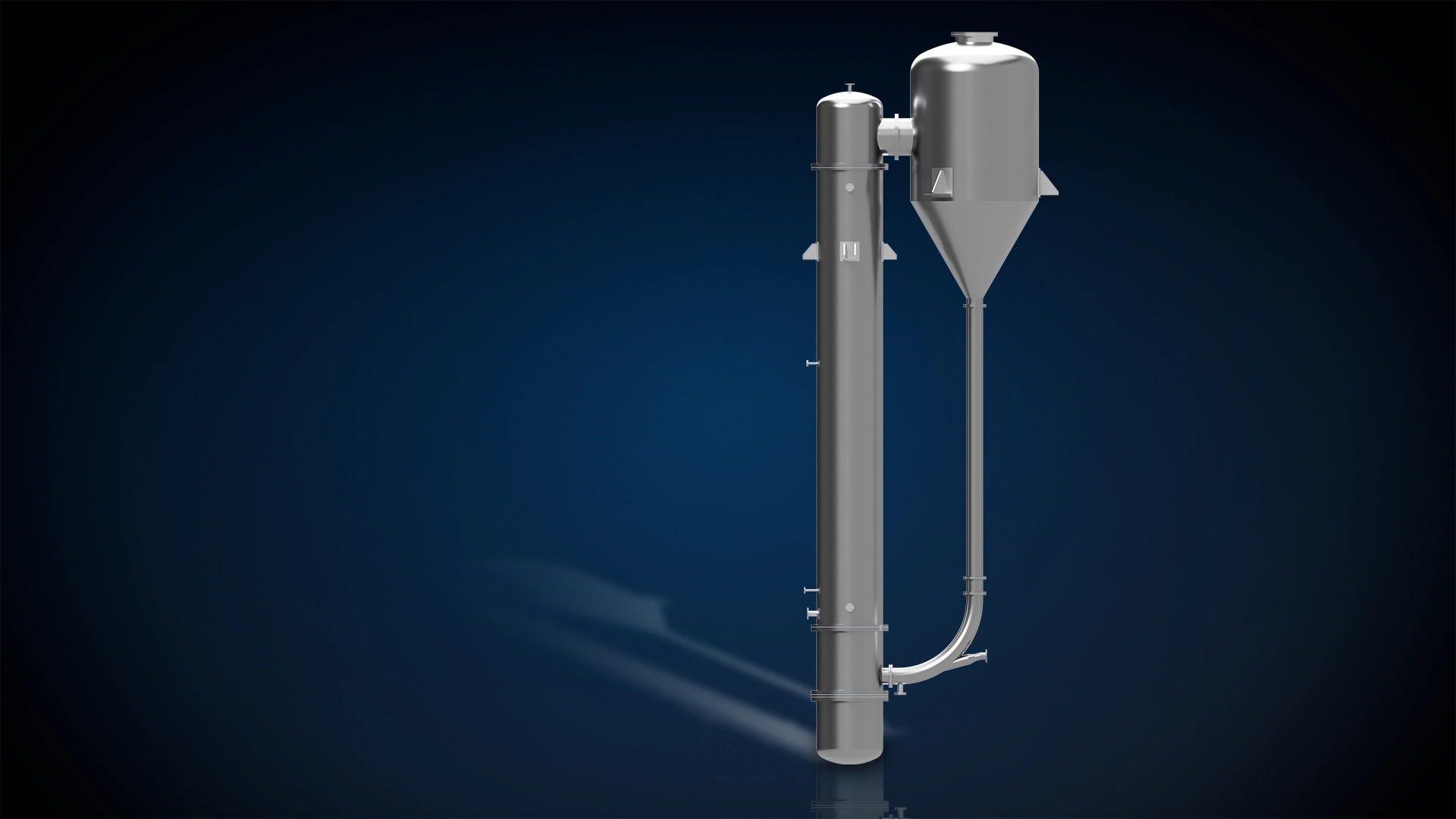
The Klaren heat exchanger allows for reliable condenser operation even when hard well water is directly used as the cooling medium. The condenser is based on a vertical shell-and-tube design and has a self-cleaning mechanism that prevents scaling before deposits can impair the heat transfer process.
On the tube side, the cooling water flows together with special cleaning particles upwards from below through the tubes, where the cleaning particles form a fluidized bed. They are kept in controlled motion by the flow and generate a continuous, gentle scouring action along the tube inner walls. This eliminates nascent mineral deposits early on before they can form an insulating scaling layer. A specially designed and engineered inlet distribution system ensures a uniform flow of water and a homogeneous distribution of the cleaning particles across all tubes. This keeps the cleaning effect stable across the entire heat transfer area – even in changing operating conditions.
Stable heat transfer over long operating times
TAPROGGE Technology
Thanks to the continuous prevention of scaling, the heat transfer surfaces remain clean. The heat transfer rate remains stable, the condensation performance is maintained, and the available cooling capacity can be utilized efficiently over long operating times. At the same time, the self-cleaning reduces the need for chemical descaling or mechanical cleaning.
In many applications, hard well water can be used directly without the need for complex water treatment or continuous chemical dosing to control scaling. Because the heat transfer surfaces remain clean during ongoing operation, the condensers can be operated for longer periods of time, shutdowns for cleaning are minimized, and plant availability is increased. This lowers operating costs and simplifies cooling water management.
More uptime, less downtime
In many applications, hard well water can be used directly without the need for complex water treatment or continuous chemical dosing to control scaling. Because the heat transfer surfaces remain clean during ongoing operation, the condensers can be operated for longer periods of time, shutdowns for cleaning are minimized, and plant availability is increased. This lowers operating costs and simplifies cooling water management.
Long track record in continuous operation
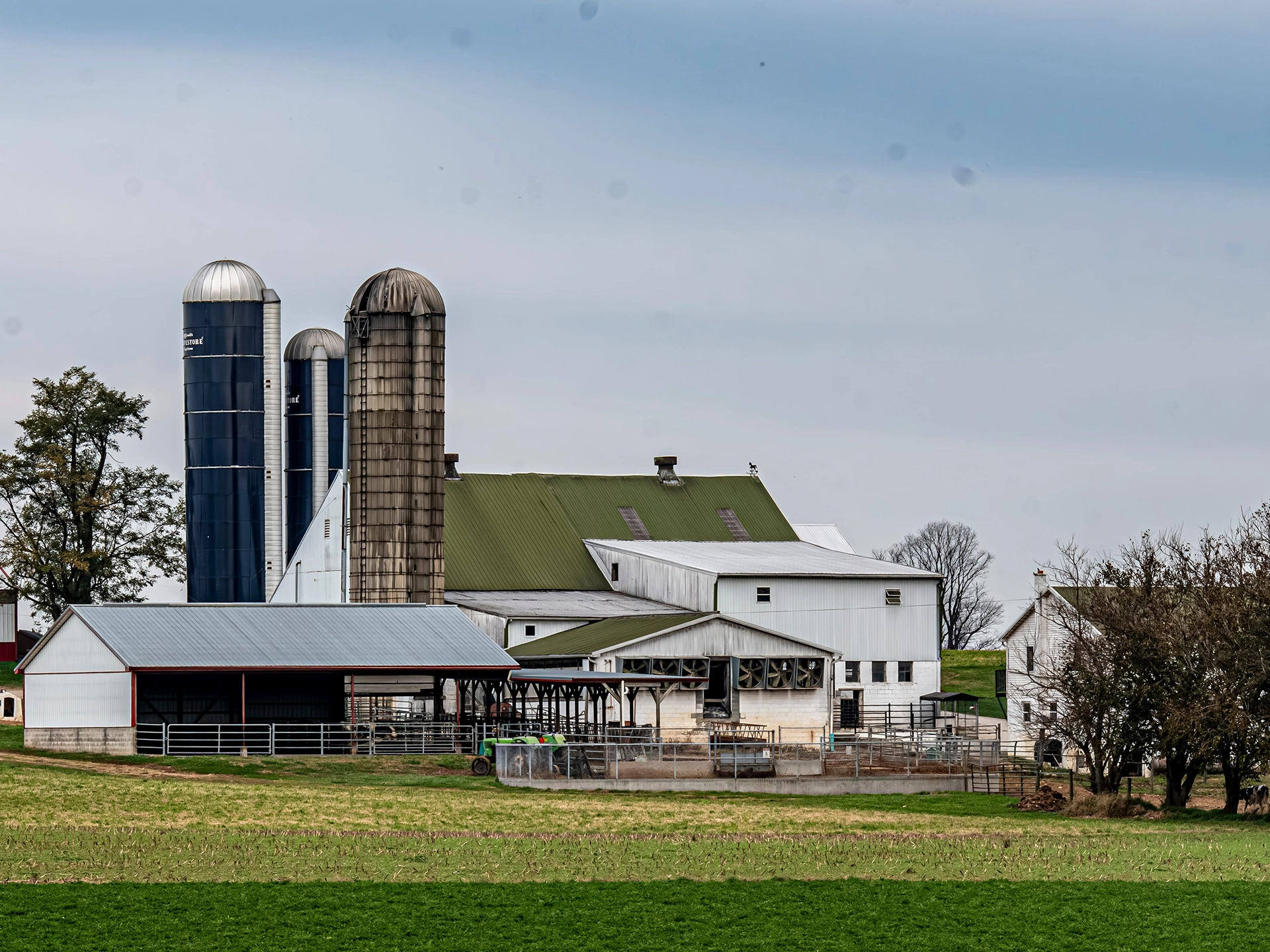
The self-cleaning heat exchanger really shines when it comes to continuous operation. In a dairy in the USA, for example, three condensers were operated with hard well water to condense the vapor from a multi-effect falling film evaporator. Conventional solutions were unable to reliably prevent the rapid scaling. After retrofitting with self-cleaning condensers in 1988, the owner noticed that their plants operated more stably and reliably and only needed to open them for inspection once or twice per year. In 2023, the customer decided to install two more self-cleaning condensers. This meant that hard well water could fulfill its purpose as a cost-effective cooling medium for stable condenser operation.
KONTAKT
Your requirements.
Our expertise.
Bring your challenge to us. We combine practical experience and technical know-how into a solution that fits into your field of application.

The Klaren heat exchanger keeps heat transfer surfaces clean, maintains the cooling capacity, and reduces maintenance, cleaning, and energy costs.
Eric Veen, Commercial Director Klaren Technology